
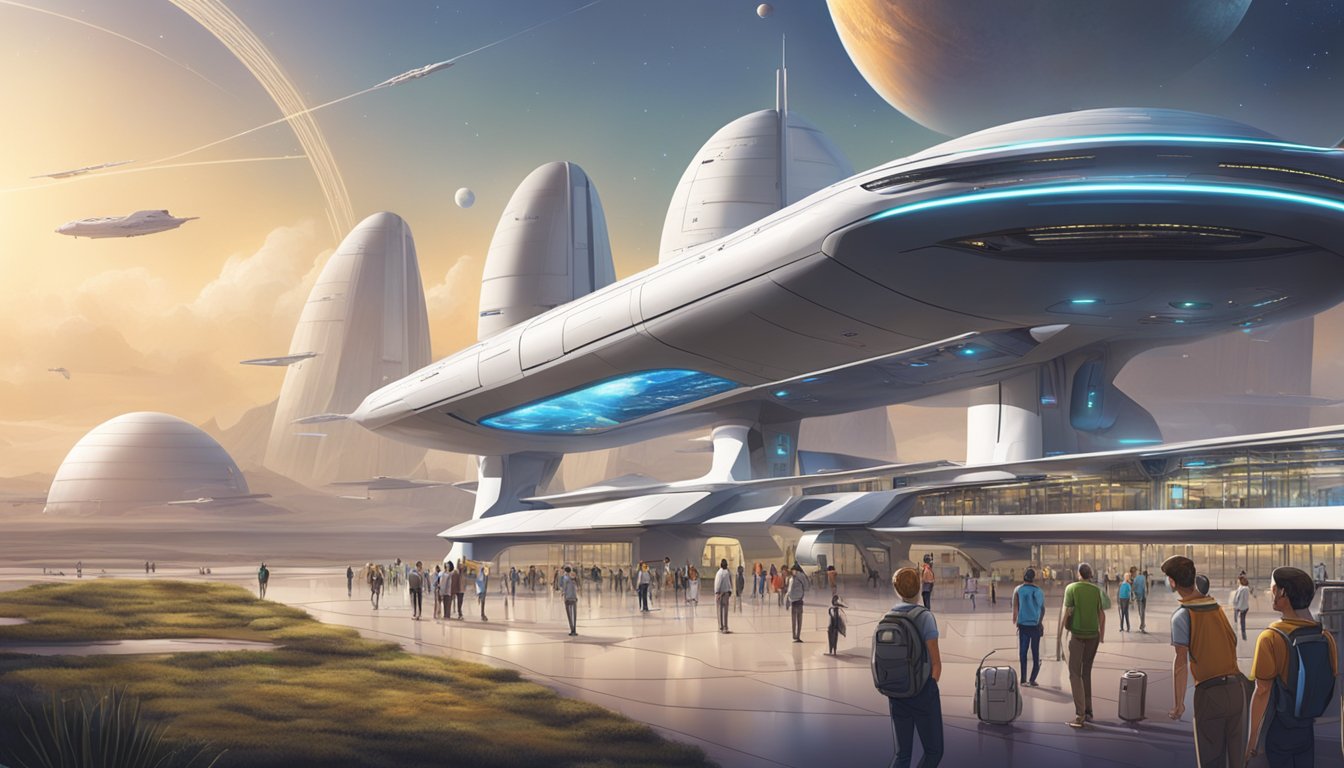
Accounting for Space Tourism: Navigating Financial Frontiers Beyond Earth
Introduction
Space tourism represents a burgeoning industry with immense potential, offering unique challenges and opportunities for accounting professionals. As private companies venture into space travel, the need for precise financial management and regulatory compliance becomes paramount. This novel sector requires innovative accounting practices to address unprecedented costs and revenue streams. The financial intricacies of space tourism include substantial initial investments, ongoing operational expenses, and revenue recognition from future bookings. Accountants must develop robust frameworks to manage these complexities while ensuring transparency and accuracy. Additionally, the industry must navigate varying international regulations and tax implications, further complicating financial oversight. Risk management is another critical aspect, as space tourism involves significant safety and technological uncertainties. Accountants will play a vital role in assessing and mitigating these risks through comprehensive financial planning and analysis. This proactive approach will help companies maintain financial stability and investor confidence as they explore the final frontier.
Historical Context
The concept of space tourism has its roots in the early days of space exploration, when the first human-made satellite, Sputnik, was launched by the Soviet Union in 1957. This event marked the beginning of the space age and sparked global interest in space travel, setting the stage for future commercial ventures.
In the 1980s, NASA’s Space Shuttle program demonstrated the feasibility of reusable spacecraft, which significantly reduced the cost of sending humans into orbit. This technological advancement laid the groundwork for private companies to consider space tourism as a viable industry.
The early 2000s saw the emergence of private spaceflight companies like SpaceX and Blue Origin, which aimed to make space travel more accessible. Their successful missions have reignited public interest and investment in space tourism, highlighting the need for robust accounting practices to manage the financial complexities of this burgeoning industry.
Financial Considerations
The burgeoning space tourism industry presents unique financial considerations that require meticulous accounting practices. Companies venturing into this final frontier must account for substantial upfront investments in technology, infrastructure, and safety measures. These high initial costs necessitate robust financial planning and risk management strategies to ensure long-term viability. Revenue generation in space tourism is another critical factor. Pricing strategies must balance affordability with the need to recoup significant expenditures. Additionally, companies must consider potential revenue streams beyond ticket sales, such as partnerships, sponsorships, and merchandising opportunities. Operational costs in space tourism are also a significant concern. These include ongoing maintenance of spacecraft, training for astronauts and crew, and compliance with regulatory requirements. Accurate financial forecasting and budgeting are essential to manage these expenses effectively and sustain operations over time. Lastly, space tourism companies must navigate complex financial regulations and tax implications. International operations may involve multiple jurisdictions, each with its own set of financial rules. Comprehensive understanding and adherence to these regulations are crucial to avoid legal pitfalls and ensure smooth financial operations.
Regulatory and Compliance Issues
Accounting for space tourism presents unique regulatory and compliance challenges. The nascent industry lacks a comprehensive framework, making it difficult for companies to adhere to standardized accounting practices. Regulatory bodies are still in the process of developing guidelines that address the complexities of space travel and tourism. One of the primary concerns is the valuation of space assets and revenue recognition. Traditional accounting principles may not adequately capture the financial intricacies involved in space tourism. Companies must navigate these uncharted waters while ensuring their financial statements remain transparent and accurate. Compliance with international regulations adds another layer of complexity. Space tourism companies often operate across multiple jurisdictions, each with its own set of rules and standards. Harmonizing these regulations is crucial for fostering industry growth and ensuring fair competition. Ensuring passenger safety and liability is also a significant regulatory issue. Companies must adhere to stringent safety standards and be prepared for potential legal ramifications in the event of accidents or malfunctions. This necessitates robust risk management strategies and comprehensive insurance coverage.
Technological and Operational Challenges
The burgeoning field of space tourism faces significant technological and operational challenges that must be addressed to ensure its viability. One of the primary concerns is the development and maintenance of spacecraft that can safely transport tourists to and from space. These vehicles must meet stringent safety standards and be capable of withstanding the harsh conditions of space travel. Operationally, space tourism companies need to establish robust training programs for both staff and passengers. This includes preparing passengers for the physical and psychological stresses of space travel, as well as ensuring that crew members are adequately trained to handle emergencies. Furthermore, logistical considerations such as launch schedules, ground support, and coordination with space agencies add layers of complexity. Another challenge lies in the financial and regulatory landscape. Companies must navigate a myriad of regulations governing space travel, which can vary significantly between countries. Additionally, the high costs associated with developing and launching spacecraft necessitate substantial investment, making financial planning and risk management crucial components of operational strategy.
Taxation and Legal Aspects
Taxation in space tourism presents unique challenges due to the lack of established international frameworks. Governments will need to collaborate to determine how taxes apply to income generated from space tourism activities, including ticket sales, services provided in space, and related business operations. Legal aspects also require significant attention as space tourism grows. Issues such as liability for accidents, passenger rights, and the regulation of space travel companies must be addressed. International treaties and national laws will need to evolve to ensure safety and fairness in this burgeoning industry. Furthermore, intellectual property rights in space tourism need careful consideration. Innovations in spacecraft technology, onboard services, and space habitats could lead to complex legal disputes. Clear guidelines and agreements will be essential to protect the interests of all stakeholders involved.
Ethical and Environmental Considerations
Space tourism, while an exciting frontier, brings forth significant ethical and environmental considerations. The industry must address the potential for increased space debris, which poses risks to both current and future space missions. Additionally, the environmental impact of rocket launches, including the release of greenhouse gases and other pollutants, cannot be overlooked. Ethically, the accessibility of space tourism raises questions about inequality and the prioritization of resources. The high costs associated with space travel mean that it is currently only available to the wealthy, potentially exacerbating social divides. Furthermore, the allocation of resources towards space tourism must be weighed against pressing issues on Earth, such as poverty and climate change. Another ethical concern is the potential exploitation of celestial bodies and their resources. As space tourism grows, there could be increased interest in mining asteroids or other planets, which raises questions about the ownership and stewardship of these extraterrestrial resources. Ensuring that space tourism develops in a way that respects both the environment and ethical principles is crucial for its sustainable future.
Future Prospects and Trends
The burgeoning field of space tourism presents unique challenges and opportunities for the accounting profession. As commercial space travel becomes more accessible, accounting standards must evolve to address new types of transactions and assets, such as space vehicles and extraterrestrial real estate. This will necessitate the development of industry-specific guidelines and best practices. Moreover, the financial implications of space tourism extend beyond direct costs and revenues. Accountants will need to consider the long-term investment in research and development, as well as the potential for new revenue streams from ancillary services like space-based entertainment and hospitality. This will require a forward-thinking approach to financial planning and analysis. The regulatory environment for space tourism is also expected to evolve rapidly. Accountants will need to stay abreast of changes in international space law and taxation policies, which could impact financial reporting and compliance. Collaboration with legal experts and policymakers will be essential to navigate this complex landscape. In addition, the rise of space tourism could spur advancements in technology and innovation. Companies in this sector will likely invest heavily in cutting-edge technologies, which will need to be accurately accounted for in financial statements. This trend underscores the importance of continuous learning and adaptation for accounting professionals in this dynamic industry.
Conclusion
As space tourism emerges as a viable industry, accounting practices must adapt to address its unique challenges. The financial complexities of space travel necessitate robust accounting standards to ensure transparency and accuracy. Companies venturing into this new frontier must prepare for significant investments and long-term financial planning. Regulatory frameworks will play a crucial role in shaping the future of space tourism accounting. International cooperation and consistent guidelines are essential to manage the financial aspects effectively. This will help in mitigating risks and fostering trust among investors and stakeholders. Finally, the integration of advanced technologies in accounting can streamline processes and enhance data accuracy. As space tourism continues to grow, the adoption of innovative accounting solutions will be vital. This will ensure that the industry remains sustainable and profitable in the long run.
Accounting for Space Tourism: Preparing for the Final Frontier
Frequently Asked Questions
Introduction
- What is space tourism? Space tourism refers to commercial activities that enable private individuals to travel into space for leisure, adventure, or research purposes.
- Why is accounting important in space tourism? Accounting ensures that financial resources are effectively managed, regulatory requirements are met, and the financial health of space tourism companies is maintained.
- What is the purpose of this article? The article aims to provide a comprehensive overview of the financial, regulatory, technological, ethical, and future considerations in the space tourism industry.
Historical Context
- What were the early developments in space travel? Early developments include the launch of Sputnik by the Soviet Union in 1957 and the Apollo moon landings by NASA in the 1960s and 1970s.
- What are the milestones in space tourism? Key milestones include Dennis Tito’s trip to the International Space Station in 2001 and the launch of commercial spaceflights by companies like SpaceX, Blue Origin, and Virgin Galactic.
- What is the current state of the space tourism industry? The industry is in its nascent stages but rapidly growing, with several companies conducting test flights and planning commercial operations.
Financial Considerations
- What are the cost structures in space tourism? Costs include spacecraft development, launch operations, safety measures, training programs, and marketing expenses.
- What are the revenue streams and pricing strategies? Revenue streams include ticket sales, partnerships, sponsorships, and merchandise. Pricing strategies vary but generally reflect the high costs of space travel.
- What are the investment and funding sources? Funding sources include private investments, government grants, venture capital, and public offerings.
Regulatory and Compliance Issues
- What are the international and national regulations? Regulations are governed by international treaties like the Outer Space Treaty and national laws specific to each country involved in space activities.
- What are the licensing and permits required? Companies must obtain various licenses and permits from space agencies and governmental bodies to conduct space tourism operations.
- What are the insurance and liability concerns? Insurance covers risks related to launch failures, accidents, and liability for damage to third parties or property.
Technological and Operational Challenges
- What are the challenges in spacecraft development and maintenance? Challenges include ensuring the reliability, safety, and sustainability of spacecraft, as well as managing the high costs of development and maintenance.
- What are the safety protocols and risk management strategies? Safety protocols include rigorous testing, crew training, emergency procedures, and continuous monitoring of spacecraft systems.
- What training and support are provided for space tourists? Space tourists undergo extensive training in physical fitness, emergency procedures, and acclimatization to microgravity conditions.
Taxation and Legal Aspects
- What are the tax implications for space tourism companies? Tax implications vary by jurisdiction but may include corporate taxes, value-added taxes, and potential tax incentives for research and development.
- What is the legal framework for space tourism? The legal framework includes international treaties, national space laws, and regulations governing commercial space activities.
- What are the considerations for intellectual property and patents? Companies must protect their innovations and technologies through patents and intellectual property rights.
Ethical and Environmental Considerations
- What is the environmental impact of space travel? Environmental impacts include carbon emissions from rocket launches, space debris, and potential harm to Earth’s atmosphere.
- What are the ethical issues in space tourism? Ethical issues include the accessibility of space travel, the treatment of space workers, and the potential exploitation of space resources.
- What is the role of corporate social responsibility in space tourism? Companies are expected to engage in responsible practices, including environmental stewardship, fair labor practices, and community engagement.
Future Prospects and Trends
- What are the predictions for the growth of space tourism? Predictions indicate significant growth, with increasing numbers of commercial flights, reduced costs, and broader accessibility.
- What are the emerging markets and opportunities? Emerging markets include space hotels, lunar tourism, and suborbital flights, offering new opportunities for investment and innovation.
- What are the innovations and technological advances? Innovations include reusable rockets, advanced propulsion systems, and enhanced safety measures, driving the evolution of space tourism.
Conclusion
- What are the key points summarized in the article? The article summarizes the historical context, financial considerations, regulatory issues, technological challenges, and future prospects of space tourism.
- What are the challenges and opportunities ahead? Challenges include regulatory hurdles, high costs, and safety concerns, while opportunities lie in technological advancements and market expansion.
- What are the final thoughts on the future of space tourism? The future of space tourism is promising, with potential for significant growth and innovation, but requires careful planning and responsible practices.